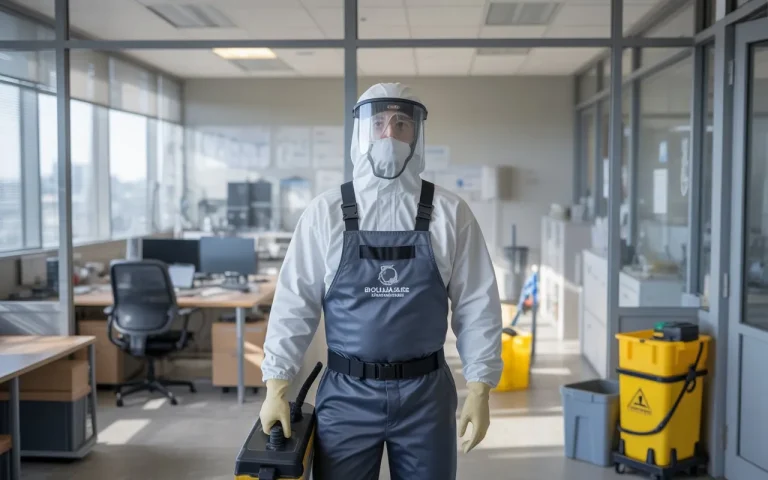
When Is Disinfectant Fogging Used?
A practical breakdown of when fogging beats conventional cleaning — and when it doesn’t — from a CDPH-registered trauma and biohazard team serving Palm Springs and the Coachella Valley.
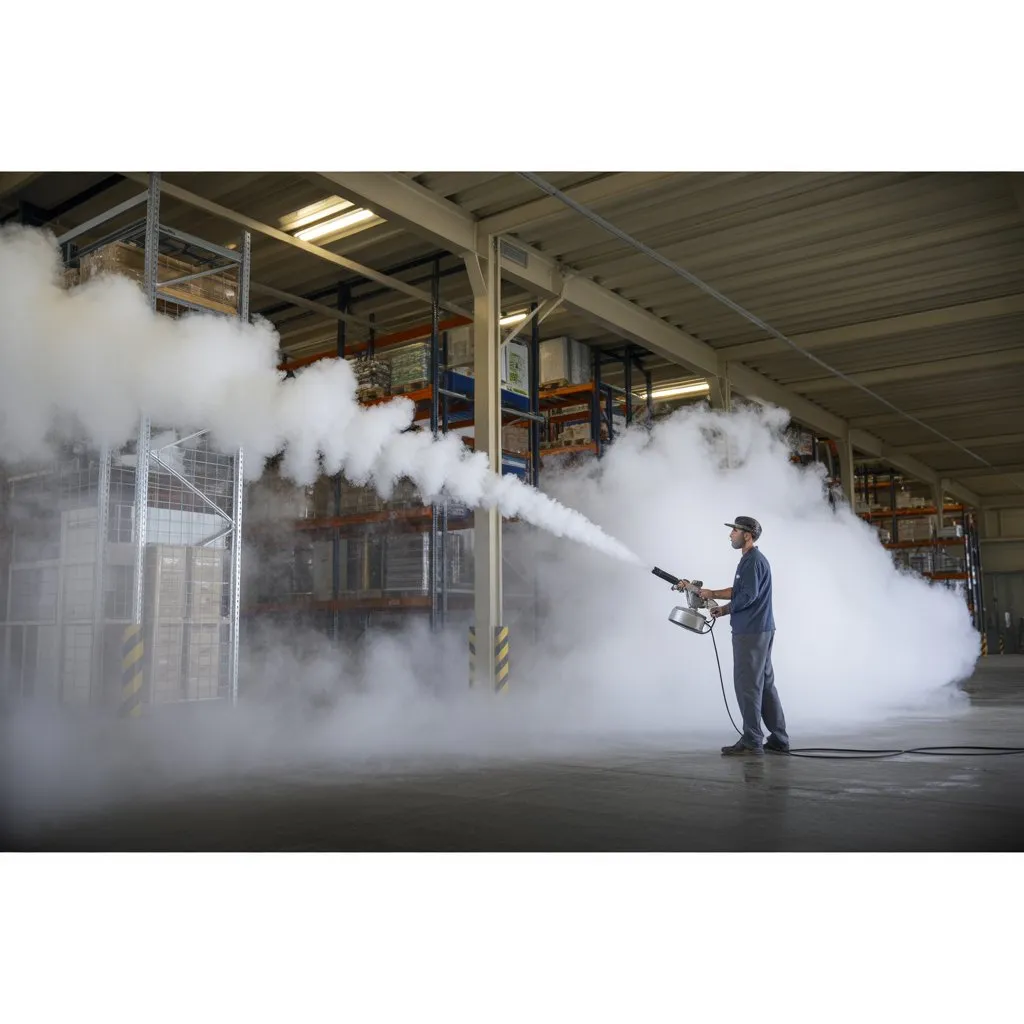
Disinfectant fogging is used for large areas, widespread contamination, and hard-to-reach surfaces that standard wiping or spraying cannot cover efficiently. Fogging turns a liquid disinfectant into a fine mist that spreads through the air and settles on surfaces, edges, and gaps a cloth or sprayer misses.
What Is Disinfectant Fogging Used For?
Disinfectant fogging is used for broad-area microbial reduction through an aerosolized disinfectant mist. A fogging device converts liquid disinfectant into fine droplets, typically between 0.5 and 50 microns. The mist disperses through a room and reaches ceilings, vents, upholstery, and equipment surfaces at the same time — unlike manual spraying, which treats one surface at a time.
When Should Disinfectant Fogging Be Used?
Disinfectant fogging is used when area size, contamination spread, surface accessibility, and disinfection requirements exceed what manual cleaning can handle efficiently. Facilities weigh 4 primary factors before choosing fogging over a conventional wipe-down.
| Decision Factor | Fogging Fit |
|---|---|
| Room size | Large, open, or multi-surface spaces |
| Contamination scope | Widespread rather than localized |
| Surface accessibility | Vents, crevices, upholstery, equipment undersides |
| Environment | Vacant during treatment, ventilated afterward |
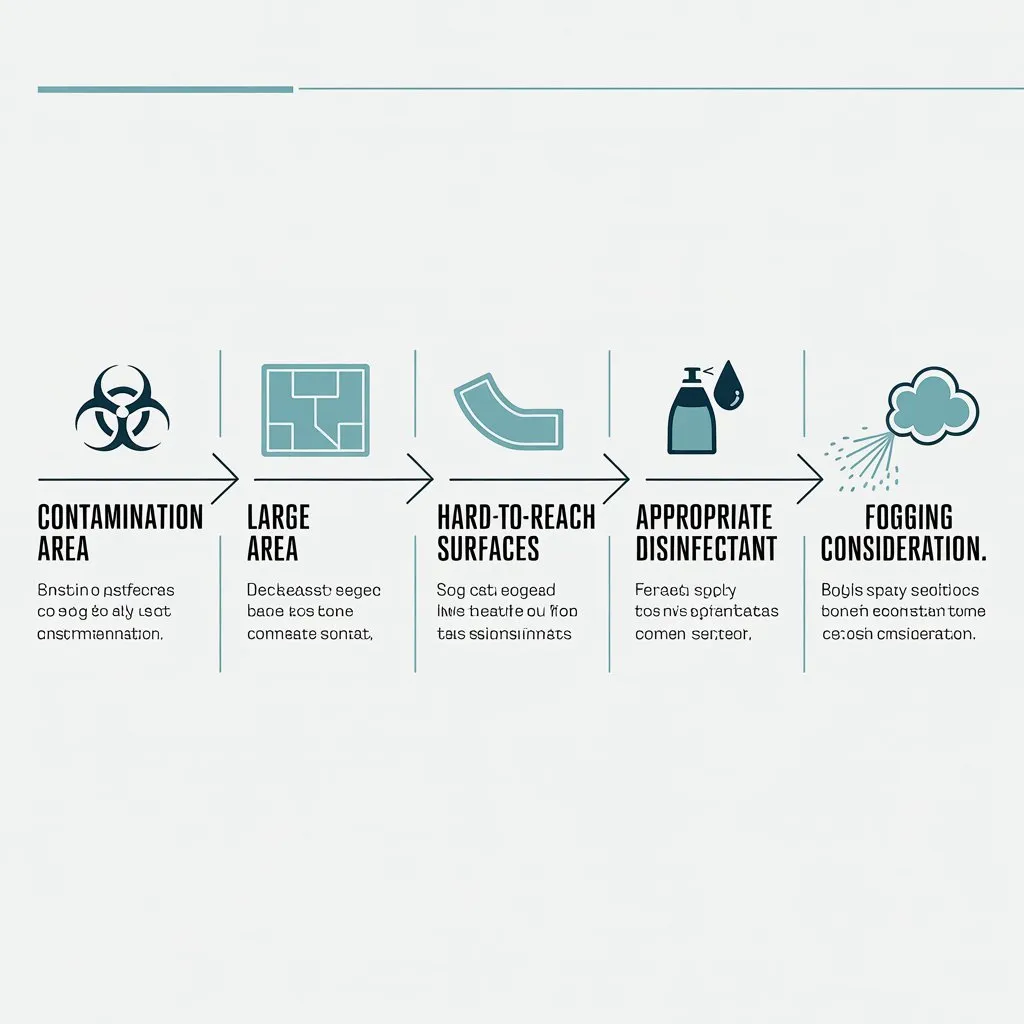
When Large Areas Need Disinfection
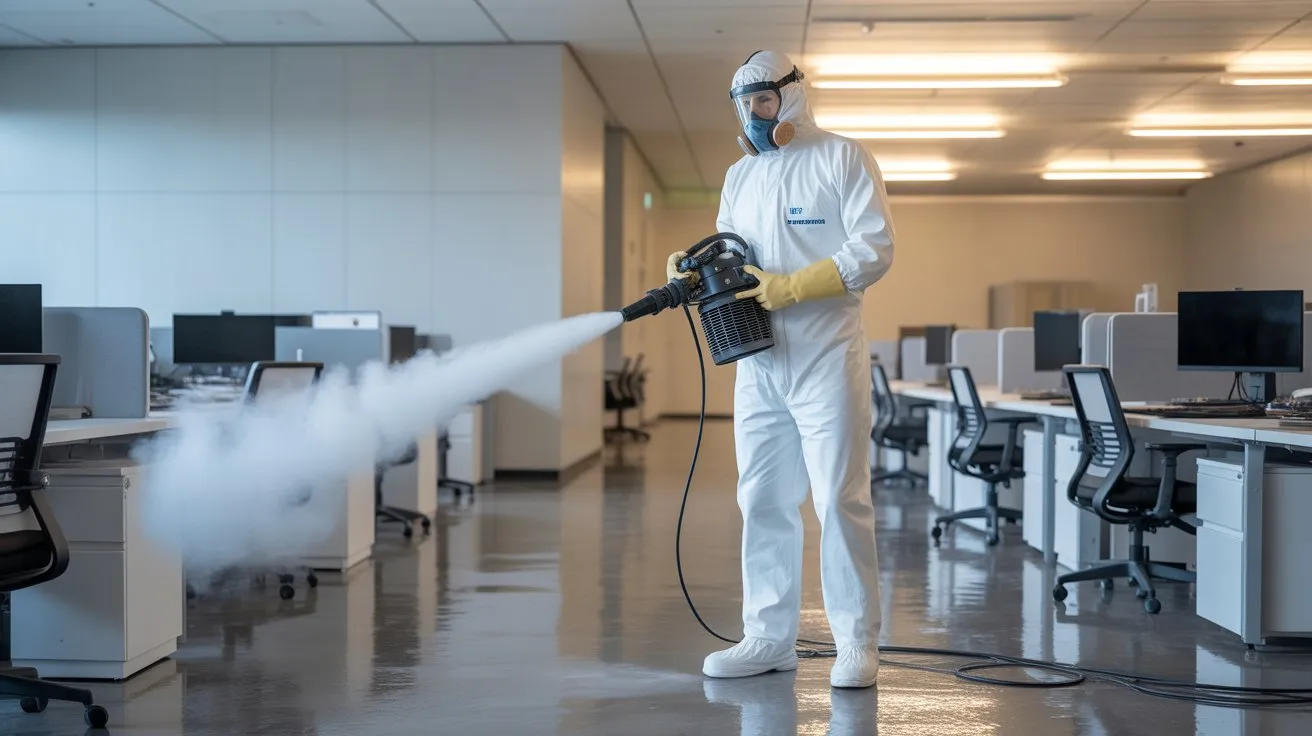
Disinfectant fogging is used in large rooms, commercial spaces, and warehouses that require broad, uniform surface coverage. Manual wiping in a large facility covers one section at a time, which increases labor hours and creates coverage gaps. Fogging distributes disinfectant across an entire room in a single application. Warehouses, gyms, and open-plan offices are 3 common examples of large areas suited to this method.
When Contamination Is Widespread
Disinfectant fogging is used when contamination affects multiple surfaces across a space rather than a single, identifiable spot. Widespread contamination spreads through air circulation, shared touchpoints, or an outbreak event. Our decomposition and odor removal jobs are a common example — odor and residue reach flooring, drywall, and subfloor well beyond the original spot, which is a scenario where fogging supports the broader remediation.
We specialize in decomposition odor and biohazard removal for severe cases.
When Areas Are Hard to Reach
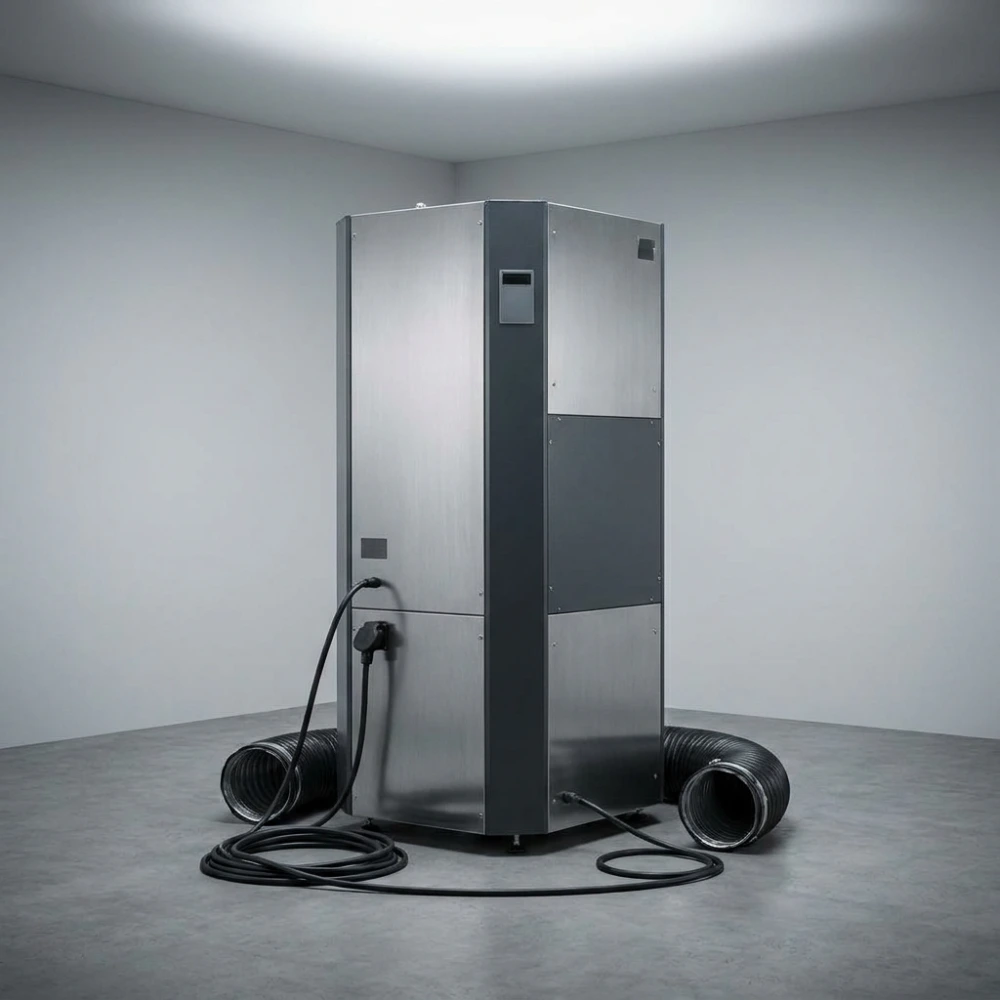
Disinfectant fogging is used for surfaces that manual cleaning tools cannot access directly, including vents, ceiling corners, and equipment interiors. Crevices, HVAC components, the undersides of furniture, and gaps behind fixed equipment fall into this category. This is also why fogging comes up in hoarding cleanup — layered belongings create hundreds of small, hard-to-reach pockets that a mist reaches more consistently than a cloth.
What Situations Is Disinfectant Fogging Used In?
Disinfectant fogging is used across homes, businesses, schools, healthcare facilities, warehouses, and public spaces where broad or hard-to-reach contamination occurs. The method applies to both residential and commercial settings, with scale and frequency adjusted to the environment.
Disinfectant Fogging for Homes
Disinfectant fogging is used in homes on an occasional basis, following illness, pest issues, or specific contamination events, rather than as routine household cleaning. Fogging becomes relevant after a household illness outbreak or a contamination event that affects multiple rooms, such as an unattended death cleanup.
Disinfectant Fogging for Businesses
Disinfectant fogging is used in businesses to disinfect large or shared areas, including offices, retail floors, and break rooms, after contamination events or on a scheduled basis. Shared workspaces involve multiple employees touching common surfaces, which increases the value of broad-area treatment. See our full range of biohazard cleaning services for commercial properties.
Disinfectant Fogging in Schools & Healthcare Facilities
Disinfectant fogging is used in schools and healthcare facilities to support infection control across shared, high-contact environments. Classrooms, hallways, waiting rooms, and patient areas involve high foot traffic and frequent surface contact. These settings often combine fogging with the same containment and disinfection standards used in our trauma scene cleanup work.
Is Disinfectant Fogging Necessary After Contamination?
Disinfectant fogging is necessary after contamination only when it is widespread, affects hard-to-reach surfaces, or involves a scale manual cleaning cannot address efficiently. Contamination on its own does not make fogging automatic. A single contaminated surface, if accessible, is disinfected more directly with a targeted wipe-down.
- 1Size of the affected area
One room versus an entire floor changes the method that makes sense.
- 2Number of surfaces involved
A handful of touchpoints versus dozens across a space.
- 3Reachability of those surfaces
Open counters clean differently than vents, crevices, or equipment interiors.
Can Fogging Be Used for Bacteria, Viruses & Pathogens?
Disinfectant fogging can be used against bacteria, viruses, and other pathogens, provided the disinfectant used is registered for that specific microorganism and applied at the correct contact time. Fogging is a delivery method, not a disinfectant itself — its effectiveness depends entirely on the chemical formulation loaded into the fogger. The EPA maintains registered disinfectant lists that specify which products are effective against particular bacteria, viruses, and other microorganisms.
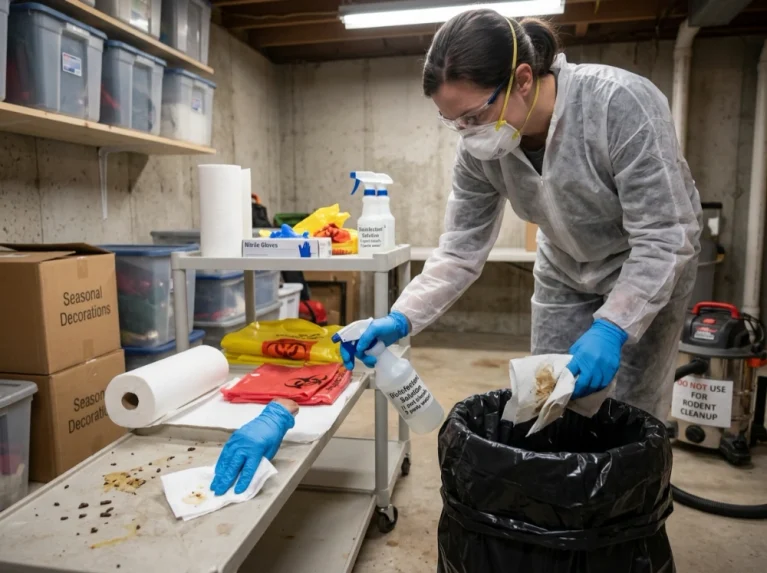
Pathogen exposure risk is not limited to blood and bodily fluids. Situations like rodent urine and feces cleanup carry hantavirus risk, and our blood and bodily fluid cleanup jobs are treated as bloodborne pathogen exposure risks under OSHA rules, regardless of the source.
Our technicians follow OSHA protocols for bloodborne pathogen cleanup on every job.
For droppings and nesting material, see our rodent contamination cleanup.
When Is Fogging Better Than Conventional Disinfection?
Fogging is better than conventional disinfection for large, hard-to-reach, or heavily contaminated areas, while conventional disinfection remains more suitable for small, easily accessible surfaces. A small, accessible countertop is disinfected faster and more precisely with a direct wipe than with a room-wide fogging cycle.
| Scenario | Better Method |
|---|---|
| Small accessible desk | Conventional wipe / spray |
| Large warehouse floor & shelving | Fogging |
| Single contaminated doorknob | Conventional wipe / spray |
| Multi-room outbreak response | Fogging |
What Factors Determine Whether Fogging Should Be Used?
Whether fogging is used depends on area size, contamination scope, surface accessibility, ventilation, target microorganisms, and disinfectant compatibility with fogging equipment. Facilities evaluate 6 factors before selecting fogging as a disinfection method.
Cleaning, Contact Time & Ventilation
Cleaning removes dirt and organic matter, while disinfection reduces pathogens on a surface, and both depend on adequate contact time and ventilation to work correctly. Cleaning physically removes soil, which allows a disinfectant to reach the surface underneath. Contact time is the duration a disinfectant must stay wet on a surface to achieve its labeled efficacy. Ventilation clears aerosolized disinfectant from the air after treatment, allowing safe re-entry.
When Should You Not Automatically Choose Fogging?
Fogging is not the automatic choice for routine, accessible surfaces, low-level contamination, or disinfectants not labeled for fogging or ULV application. A single accessible desk, doorknob, or countertop is disinfected more directly with a wipe or spray. Product-label restrictions also apply: a disinfectant not approved for aerosolized application is not converted into a fogging solution regardless of the equipment available.
Does Fogging Replace Cleaning?
Fogging does not replace cleaning. Cleaning removes dirt, dust, and organic material from a surface before disinfection occurs. A disinfectant applied through fogging onto an uncleaned surface reduces its contact with the pathogens underneath the soil layer. Cleaning always comes first, followed by disinfection.
Is ULV Fogging the Same as Disinfectant Fogging?
ULV (Ultra-Low Volume) fogging is a specific technique that produces very fine droplets, and it is one method used to apply disinfectant, not a separate category from disinfectant fogging. A ULV fogger generates droplets typically under 20 microns, which stay suspended in air longer and cover surfaces more evenly than larger-droplet foggers.
FAQs About Disinfectant Fogging
When should disinfectant fogging be used?
Disinfectant fogging is used for large areas, widespread contamination, or hard-to-reach surfaces that manual cleaning cannot cover efficiently.
Can disinfectant fogging be used in homes?
Disinfectant fogging can be used in homes after illness outbreaks or specific contamination events, rather than as routine daily cleaning.
Is disinfectant fogging suitable for large areas?
Disinfectant fogging is suitable for large areas, including warehouses, offices, and commercial floors, due to its broad, uniform coverage.
Does disinfectant fogging kill germs?
Disinfectant fogging kills germs when the disinfectant used is registered for the target pathogen and applied for the contact time listed on its label.
Conclusion: When Is Disinfectant Fogging Used?
Disinfectant fogging is used when a space is large, contamination is widespread, surfaces are hard to reach, or manual disinfection cannot meet the required coverage within a practical timeframe. The decision depends on 5 factors: area size, contamination scope, surface accessibility, the correct disinfectant for the target pathogen, and adequate contact time and ventilation. Fogging complements cleaning — it does not replace it.
Not sure if your situation needs fogging?
Talk to a CDPH-registered team — available 24/7 across the Coachella Valley.
Understand why professional rodent feces and urine cleanup is needed for your health and safety.