Home › Blog › Unattended Death Cleanup
Unattended Death · Summer HeatWhy Summer Heat Makes Unattended Death Cleanup Urgent
Unattended death cleanup becomes urgent in summer because heat speeds decomposition, spreads biological fluids, and multiplies bacteria within hours. An unattended death is any death where the body stays undiscovered for any length of time, according to Aftermath Services. Warm indoor temperatures shorten the time between death and structural contamination from days to hours. Odor, insects, and pathogens reach carpets, subfloors, and walls. This guide explains 5 effects of summer heat, 4 health risks, the 6 stages of professional cleanup, and insurance coverage.
Why Does Summer Heat Make Unattended Death Cleanup Urgent?
Summer heat accelerates bacterial activity, which drives decomposition, fluid release, and odor. Each added day of heat pushes contamination from visible surfaces into carpet padding, subflooring, and wall cavities. Prompt professional cleanup limits that spread and reduces the amount of material removed.
WSOC explains that summer heat speeds decomposition because bacteria thrive in warmer settings. Aftermath Services reports a rise in unattended death cases during heat waves.
There are 5 main effects of summer heat on an unattended death scene:
| Effect | What Happens | Cleanup Consequence |
|---|---|---|
| Faster bacterial growth | Bacteria multiply in warm tissue and fluids | Larger contaminated area |
| Earlier fluid release | Decomposed blood and fluids leave the body sooner | Deeper absorption into flooring |
| Stronger odor | Gas formation increases in warm air | Odor reaches walls, fabrics, and ducts |
| Rapid insect activity | Flies and beetles arrive within 24 to 28 hours | Larvae and eggs spread contamination |
| Longer exposure to heat | Warm rooms keep decomposition active | Higher restoration scope |
How Does Summer Heat Decomposition Change Over Time?
Summer heat decomposition moves through its stages faster than decomposition in cool conditions. Bacterial replication, insect growth, and chemical reactions all depend on temperature.
A 2013 American Academy of Forensic Sciences presentation reviewed three major studies. In those studies, accumulated temperature explained 73% to 87% of the variation in soft tissue decomposition. A forensic reference reports advanced decomposition in as little as 24 hours in hot subtropical areas. Cold slows the same process. Morgue coolers hold bodies at 38°F to 42°F to slow decomposition for days to weeks.
Room conditions change the outcome. Bio Recovery notes that dry heat can desiccate a body, while moist air speeds putrefaction. A University of Tennessee master’s thesis by Carrie Srnka found that sun exposed bodies progressed faster through early stages. Those bodies also dried out earlier, which stalled later decomposition.
| Room Condition | Effect on Remains | Cleanup Consequence |
|---|---|---|
| Hot and humid | Rapid putrefaction and heavy fluid release | Subfloor and padding contamination |
| Hot and dry | Desiccation or mummification in days to weeks | Less fluid, persistent odor and residue |
| Cool and ventilated | Slower decomposition | Smaller contamination zone |
Heat accelerated decomposition also raises the number of materials affected. Porous items such as carpets, mattresses, and upholstered furniture absorb fluids quickly. Learn more about decomposition cleanup.
What Health Risks Does Heat Add to an Unattended Death Scene?
Heat adds 4 health risks to an unattended death scene: pathogen exposure, airborne bacteria, insect spread, and mold growth.
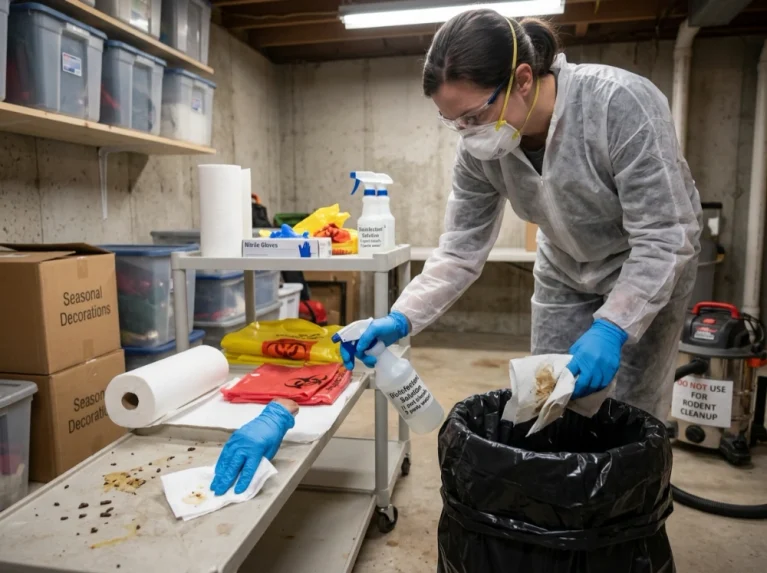
- Bloodborne pathogens: Blood and body fluids may carry HIV, hepatitis B, hepatitis C, and MRSA. Bio Recovery states that pathogens can pass along disease days or months after death.
- Airborne bacteria: Bacteria and decomposition gases cause lingering odors that affect future occupants.
- Insect spread: Flies and beetles carry contamination to other rooms and surfaces.
- Mold growth: Poorly executed cleanups leave moisture in subflooring, carpet padding, and furniture, where mold and fungus develop.
OSHA’s Bloodborne Pathogens Standard (29 CFR 1910.1030) requires training, personal protective equipment, an exposure control plan, and hepatitis B vaccination for workers exposed to infectious materials.
What Does Professional Biohazard Cleanup Involve?
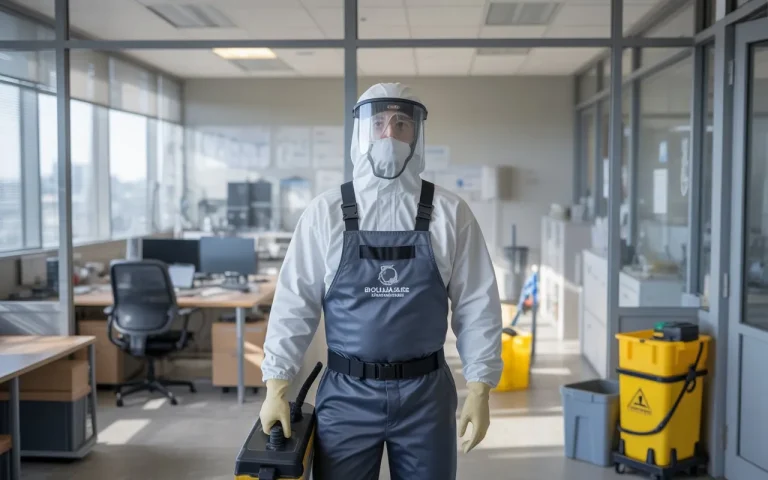
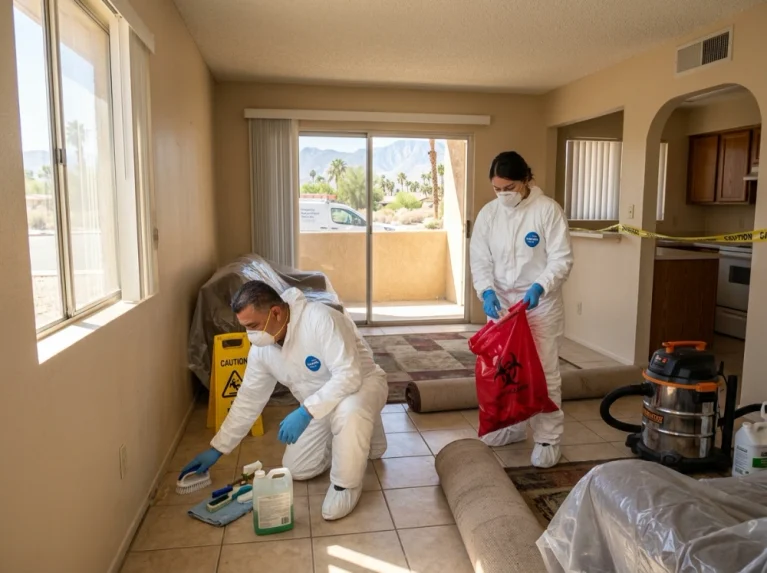
Professional biohazard cleanup involves 6 stages: assess the scene, remove porous materials, disinfect surfaces, treat subfloors, deodorize the space, and verify the result.
- Assess the scene. Technicians survey the property and prepare a written proposal for approval.
- Remove porous materials. Carpets, bedding, and furniture are removed and disposed of as biohazard waste.
- Disinfect surfaces. Technicians clean hard surfaces with professional grade disinfectants.
- Treat subfloors. Fluids flow downward by gravity, so padding and subfloor layers are checked and treated.
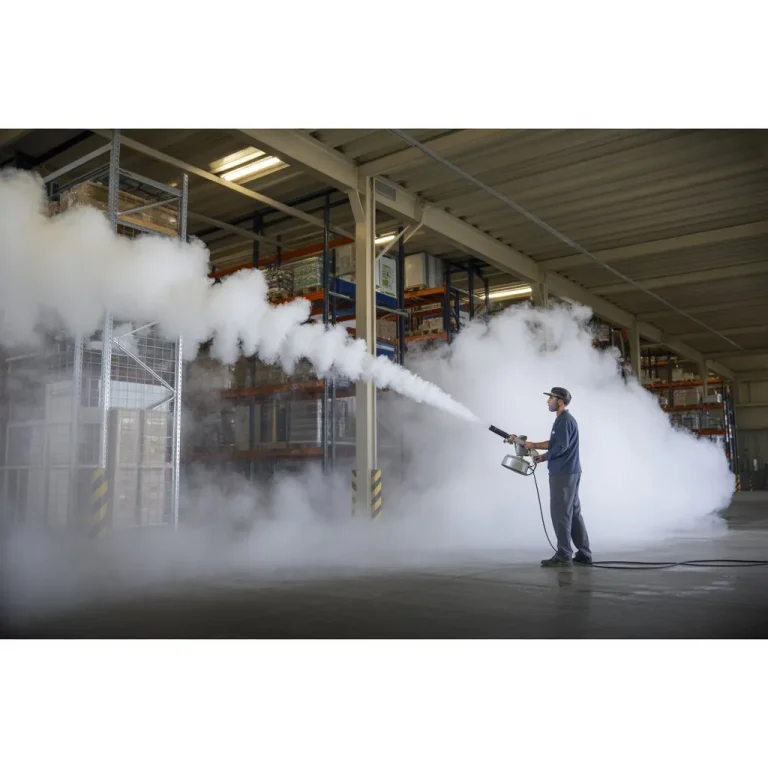
- Deodorize the space. Odor treatment targets the source, not only the air.
- Verify the result. A final inspection confirms that contamination is removed, and documentation supports insurance claims.
Law enforcement and medical examiners remove the body before cleanup begins. Investigations can delay the start of cleanup. Aftermath Services notes that bioremediation is not a federally regulated industry in the United States, so OSHA bloodborne pathogen training and proof of insurance are useful screening criteria. See how our unattended death cleanup service works.
Can Families Clean an Unattended Death Scene Themselves?
No, DIY cleanup exposes families to bloodborne pathogens and leaves hidden contamination behind. Fluids soak into porous materials and seep into areas that stay out of sight. Stains on wood and concrete can disappear and return later, according to Aftermath Services.
Household cleaners do not remove pathogens from carpet padding or subflooring. Residual odor often signals incomplete cleanup, and fading odor does not confirm pathogen removal, as PuroClean notes.
Does Insurance Cover Biohazard Cleanup After an Unattended Death?
Homeowners insurance often covers the cleanup, depending on the policy and the cause of death. Coverage differs by policy type.
| Policy Type | Typical Coverage |
|---|---|
| Homeowners insurance | Often covers cleanup as property damage |
| Landlord insurance | Often covers cleanup as restoration of the unit |
| Commercial property insurance | May cover cleanup and business interruption |
| Renters insurance | Covers belongings and temporary housing, not property cleanup |
Bio Recovery reports that insurance generally pays between $2,500 and $7,500 or more, depending on the situation. The same provider states that a project takes a few hours to several days. Final cost depends on contamination level, affected area, odor severity, and structural material removal. See biohazard cleanup cost in Palm Springs.
What Steps Follow the Discovery of an Unattended Death in Hot Weather?
Contact emergency services first, then arrange professional biohazard cleanup after the scene is released.
- Call emergency services and law enforcement.
- Keep children, pets, and visitors out of the property.
- Leave all materials untouched until investigators release the scene.
- Contact a biohazard cleanup company that follows OSHA standards.
- Notify the insurer or landlord, and request a written claim number.
- Request written documentation of the completed cleanup.
Frequently Asked Questions
How fast does decomposition start in hot weather?
Decomposition starts immediately after death, and heat shortens each stage. Insects arrive within 24 to 28 hours, according to Bio Recovery. Forensic sources report advanced decomposition in as little as 24 hours in hot subtropical areas. Humidity speeds putrefaction further, while dry heat can cause desiccation.
How long does decomposition cleanup take?
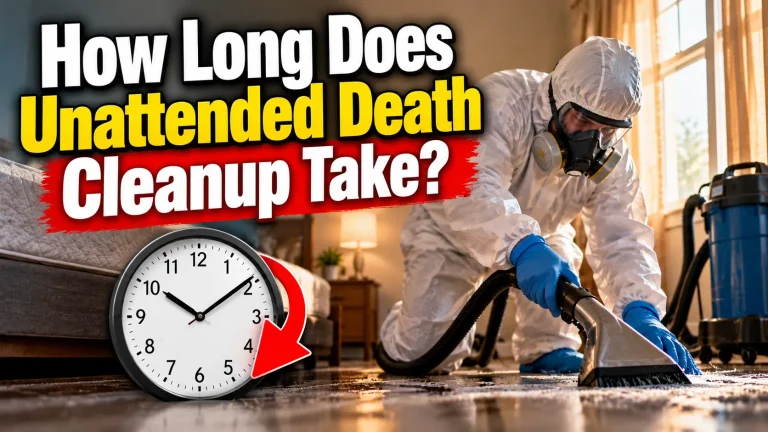
Decomposition cleanup takes a few hours to several days. Duration depends on contamination level, affected materials, and odor severity. Scenes with fluid in the subfloor require longer treatment than surface contamination. Hoarding conditions add time because the property requires decluttering before contamination is located.
Does odor mean pathogens are still present?
Odor signals decomposition residue, but a missing odor does not confirm a safe space. PuroClean states that harmful pathogens can remain after odors fade. Professional teams inspect and test affected areas, then document the result.
Who pays for cleaning up after an unattended death?
Property owners carry primary responsibility, and insurance often covers the cost. Homeowners, landlord, and commercial policies are the most common sources of payment. Estate funds and assistance programs also pay in some cases. Renters insurance does not cover property cleanup.
Final Thoughts
Summer heat shortens the time between death and widespread contamination. Bacteria, fluids, insects, and odor spread faster in warm rooms, so unattended death cleanup protects health and limits property damage. Professional biohazard cleanup removes pathogens that household cleaning cannot reach. Property owners, landlords, and families reduce risk by contacting a certified team immediately after law enforcement releases the scene.
Check a related guide: Unattended Death Cleanup: What Families Need to Know.
Need Unattended Death Cleanup in Palm Springs?
Biohazard Cleanup Palm Springs responds 24/7 across the Coachella Valley with discreet, CDPH-registered technicians.
Call 24/7: +1 (760) 606-5513 Unattended Death CleanupInsurance rules, regulations, and reporting requirements differ by state and country. Confirm local requirements with the insurer and local authorities.
Sources
- Aftermath Services: Northern California Unattended Death Cleanup
- WSOC: Unattended Death
- Bio Recovery: Unattended Death Cleanup Definitions
- Bio Recovery: Solving Problems Associated With Unattended Death
- Bio Recovery: Unattended Death Cleanup
- AAFS 2013 H106: Decomposition, Temperature, Taphonomy
- University of Tennessee: Effects of Sun and Shade on Early Human Decomposition
- Forensic Field: Decomposition
- Aftermath Services: Understanding Unattended Death Cleanup
- PuroClean: How Biohazard Cleanup Is Handled After an Unattended Death
- PuroClean Scottsdale: Unattended Death Cleanup and OSHA